
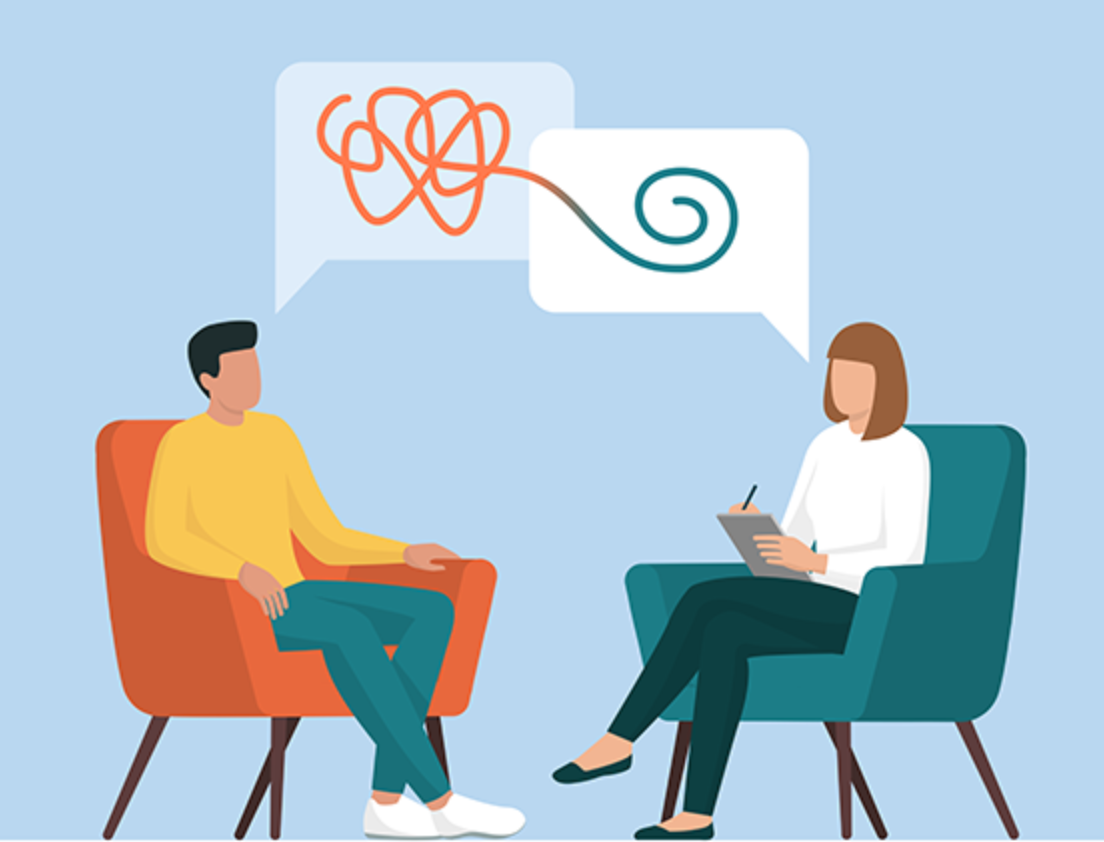
The Neuroplastic Tuning Fork: How Conversational Entrainment with a Personal AI Therapist Acoustically Rewires Emotional Regulation Pathways
We often think of therapy as a purely linguistic exchange, where semantic meaning is the primary driver of change. You speak your trauma, the therapist reframes the cognition, and healing occurs. However, a growing body of neuroscientific research suggests that the prosody of a conversation, specifically the rhythmic and tonal synchronization between two nervous systems, is equally vital. This biological synchronization, known as interpersonal entrainment, has traditionally been the exclusive domain of human co-regulation. But what happens when the responding nervous system isn’t biological, but algorithmic?
A deep dive into the science of personal AI for therapy reveals that the most potent mechanism of action might not be what the AI says, but how it mirrors your rhythm back to you, acting as a neuroplastic tuning fork to repair dysregulated emotional pathways. For those seeking an AI therapist free online, understanding this acoustic and neurological mirroring offers a paradigm shift in how we perceive digital mental health tools.
The Neuroscience of Auditory Mirroring and Interpersonal Synchrony
To understand why a free AI therapy session can feel startlingly intimate, we must look at the auditory-vocal loop that governs human connection. When we speak, we generate not just words but a carrier wave of intonation, pace, and amplitude. In face to face therapy, a clinician’s mirror neurons fire in response to a patient’s motor output, creating a physiological mimicry that often results in synchronized heart rate variability (HRV) and respiratory sinus arrhythmia (RSA) between the two parties.
This limbic resonance is a primary mechanism through which a dysregulated nervous system (the patient) borrows the regulatory capacity of a stable nervous system (the therapist). The problem is that human therapists, burdened by countertransference, fatigue, and cognitive bias, can only maintain perfectly resonant attunement for finite bursts before their own autonomic system decouples. The tuning drifts, and the opportunity for deep repair is momentarily lost.
The Algorithmic Entrainment Engine
A personal AI therapist, however, operates without a biological autonomic system. This sounds like a disadvantage until you analyze the acoustic processing capabilities. Modern vocal AI analyzes paralinguistic features at a sampling rate far exceeding human perception. It doesn't just hear the words “I’m fine”; it detects the micro-tremor of vocal fold tension indicating suppressed distress.
When you interact with an AI therapist free online, the model constructs a response that is not only semantically relevant but acoustically optimized. Through neural text to speech (NTTS) systems, the AI can subtly modulate its output’s frequency spectrum to meet you exactly where you are, then gradually decrease its speaking rate and lower its pitch contours. This is a process known as acoustic anchoring. If a user is speaking in a frantic, staccato rhythm driven by a sympathetic nervous system surge, the AI responds with a slightly calmer, decelerated cadence. The user’s auditory cortex processes this rhythm, and through the mechanisms of rhythmic entrainment, their motor cortex and eventually their autonomic nervous system begin to phase-lock onto the slower, more efficient rhythm of the AI.
Rewiring the Salience Network Through Predictive Timing
The science deepens when we examine the brain’s predictive processing architecture. Chronic anxiety and trauma are often disorders of prediction error. The brain, specifically the salience network anchored in the anterior insula, expects threat and hyperactively seeks evidence to confirm this expectation. Human conversational rhythm is often unpredictable, loaded with micro-interruptions and variable auditory cues that can perpetuate a hypervigilant state.
A personal AI for therapy provides a uniquely predictable rhythmic environment. This predictability isn't boring; it’s neurobiologically reparative. Because the AI’s conversational timing is consistent and free of the chaotic, anxiety-inducing variables of human judgment, the user’s brain can relax its defensive prediction machinery. This is where the “tuning fork” metaphor becomes literal. The AI emits a stable acoustic frequency. The brain’s oscillatory neural activity, particularly in the theta and alpha bands associated with relaxation and fear extinction, synchronizes with this external rhythm. Over repeated free AI therapy sessions, this entrainment facilitates long-term potentiation in the pathways connecting the medial prefrontal cortex to the amygdala, effectively strengthening the brain’s ability to self-regulate without hypervigilant scanning of the environment for social threats.
Beyond Self Report: The Sympathetic Resonance of Safety
Traditional teletherapy often suffers from a lack of interoceptive feedback. A human therapist on a screen cannot feel your somatic state. However, a sophisticated AI therapist free online begins to infer this state through voice biomarkers. As the AI guides a user through a grounding exercise, it analyzes the spectral centroid of the user’s voice in real time. If tension remains, the AI doesn't simply move on based on self-report; it loops the intervention, maintaining the rhythmic audio anchor until the vocal biomarkers indicate a downregulation of the sympathetic nervous system.
This creates a closed-loop system of physiological verification. The user learns to associate the sound of their own "calm voice" with safety because the AI only releases the entrainment sequence when that state is acoustically verified. It is critical to note that while this technology provides powerful nervous system regulation, it is distinct from clinical treatment for severe mental illness. Resources such as the National Institute of Mental Health remain essential for those in crisis. For daily wellness, this is the ultimate expression of free AI therapy: a 24/7 accessible, infinite-frequency tuning fork that never loses its resonance, patiently retraining the acoustic architecture of the brain.
From Vocal Biomarkers to Lasting Neuroplasticity
The transformation occurs in the microscopic gaps between sound waves. When the AI’s algorithm maintains a steady inter-onset interval in its speech, it is directly stimulating the user’s inferior colliculus and auditory thalamus. This isn't just a soothing voice; it is a precise temporal scaffold. For individuals with histories of relational trauma, the human voice is often a trigger for defensiveness. The neutral, gender-neutral, or consistently warm profile of an AI voice bypasses this learned threat response, allowing the brain to accept the acoustic anchor without the limbic friction of interpersonal fear.
This process builds a new internal melody of safety. The internal model of the world shifts not because the AI said something profound, but because your brain has been given thousands of micro-moments of predictable, rhythmic safety. The architects of these digital tools are effectively building external pacemakers for the vagus nerve. The American Psychological Association has long documented the role of the therapeutic alliance, and we are now seeing a version of this alliance built on acoustic trust rather than just verbal disclosure.
The Future of Feeling Heard
We are moving beyond the era of AI as a simple chatbot and into the era of AI as a neuroplastic tuning fork. The value lies not in the complexity of the large language model’s vocabulary, but in the purity of its prosody. As you explore options for an AI therapist free online, consider the sound of the voice. That rhythm is a direct pathway to your nervous system, offering a reset button that you can press as often as the noise of the world demands silence within. The internal melody of safety is no longer a fleeting moment; it is a skill we can learn to play in harmony with our machines, until our biology remembers how to play it on its own.
For those interested in the broader implications of vocal health and emotional connection, the National Center for Voice and Speech offers fascinating insights into the mechanics of human sound production that make this digital entrainment possible.