
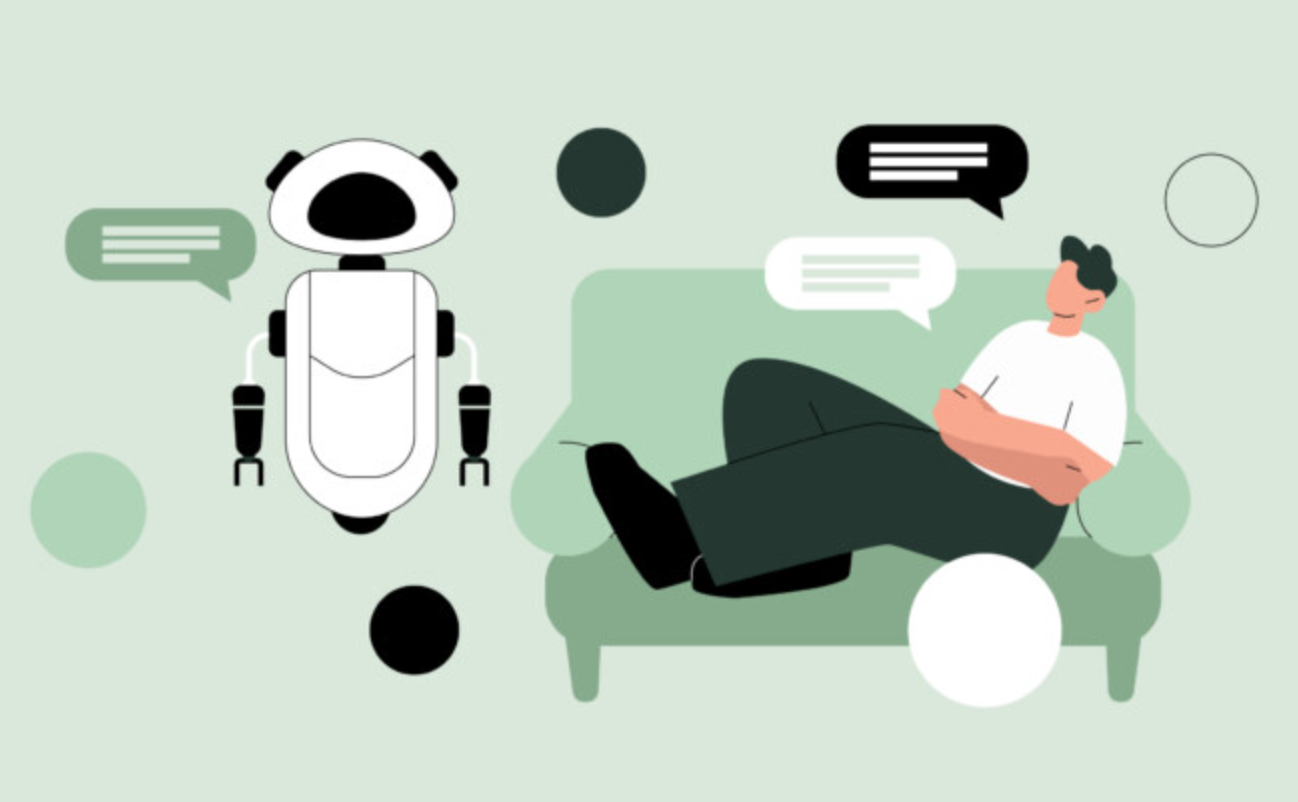
The Hedonic Adaptation Circuit Breaker: A Deep Dive into Neuroplasticity and Dopaminergic Forecasting to Understand How an Online Therapist Chatbot Disrupts Emotional Stagnation with Free AI Therapy Interventions
We have all tasted the sweetness of a new beginning. A new job, a new relationship, a new city. In the first few weeks, the world seems to shimmer with a high definition vibrance. Our brains are flooded with a sense of reward, novelty, and possibility. Yet, inevitably, the shimmer fades. The "new normal" sets in, and the extraordinary becomes ordinary. This psychological phenomenon, known as hedonic adaptation, is the silent killer of joy. It is the reason the dream car eventually becomes just a car, and the passionate romance settles into a comfortable routine you might take for granted. But what if there was a way to interrupt this cycle? What if technology, specifically online AI therapy, could act as a circuit breaker to reset our emotional baselines? This article explores the intersection of neuroplasticity, dopaminergic forecasting, and the unique capabilities of an online therapist chatbot to jolt us out of emotional stagnation.
Understanding the Hedonic Treadmill: Why We Get Used to Happiness
Hedonic adaptation is our brain’s natural thermostat. It works to maintain a stable level of happiness regardless of external circumstances, whether we win the lottery or suffer a minor setback. Evolutionarily, this served a purpose: if we stayed too ecstatic for too long after finding food, we might not be motivated to hunt again. However, in the modern world, this ancient wiring often translates to a feeling of numbness. We chase the next dopamine hit, only to find the bar has been raised. This is the "treadmill" effect; we keep running, but we stay in the same emotional place.
This stagnation is not a result of a lack of effort, but rather a disruption in what neuroscientists call "dopaminergic forecasting." Our brains are constantly predicting rewards based on past experiences. When reality matches the prediction, dopamine levels plateau. The excitement is gone. To feel the rush again, we need a prediction error: a situation where something is better than expected. Without this novelty, the brain stops paying conscious attention to the good things in our lives, rendering us blind to our own blessings.
Neuroplasticity: The Brain’s Ability to Rewire
For decades, scientists believed the brain was a static organ, fixed after childhood. We now know this is false. Neuroplasticity is the brain's remarkable ability to reorganize itself by forming new neural connections throughout life. This means that the very pathways that lead to hedonic adaptation can be reshaped. If the brain has learned to ignore the good, it can learn to see it again.
This is where an online therapist chatbot comes into play. Unlike traditional journaling, which can often stay on the surface, a sophisticated AI bot acts as an active mirror. It uses principles of cognitive behavioral therapy (CBT) to challenge the cognitive distortions that feed the hedonic treadmill. By asking specific, personalized questions, it forces the brain to engage in "deep processing," which is required for neuroplastic changes to occur. The AI interrupts the automatic loop of taking things for granted by injecting micro-moments of reflection and gratitude that our default mode network usually skips over.
Disrupting the Loop: The Role of an Online Therapist Chatbot
How does a text-based interface disrupt a chemical process in the brain? The answer lies in accessibility and consistency. A human therapist is invaluable, but sessions are often weekly and expensive. An online therapist chatbot offers free AI therapy interventions at the exact moment a negative thought loop begins, not a week later when the emotional intensity has faded.
Consider the concept of "emotional forecasting." When we are stuck in a rut, we predict our future emotions incorrectly. We tell ourselves, "This is just how my life is now; it will always feel this dull." The AI chatbot acts as a dopaminergic forecasting corrector. When you type out these defeatist thoughts, the AI analyzes the language and identifies the prediction error. It might respond with a prompt that challenges the permanence of the feeling: "You say it will always feel this way, but can you recall a time last week when you felt a spark of interest? What were you doing?" This simple prompt forces the brain to search its database for a contradicted memory, actively rewriting the narrative and breaking the spell of stagnation.
The Dopaminergic Forecasting Correction: How AI Rewires Expectation
Dopamine is often misunderstood as the "pleasure chemical." It is actually the "motivation and anticipation" chemical. It spikes not when we get the reward, but when we anticipate it. When we are jaded, our dopamine systems are underactive because we have stopped anticipating positive outcomes. We "know" how the day will go, so there is no reason for the brain to allocate energy to dopamine production.
An online AI therapy session can recalibrate this. By utilizing patterns derived from positive psychology, the AI can guide a user through "savoring" exercises. It might ask you to describe a recent positive interaction in excruciating detail, down to the color of the room and the tone of the voice. This linguistic immersion forces the brain to re-live the moment, firing the same neural networks that were active during the actual event. Over time, this practice lowers the threshold for dopamine release, allowing you to find joy in smaller, more sustainable moments rather than chasing the next massive life change. This process effectively reboots the system, serving as a circuit breaker between the stimulus (everyday life) and the response (boredom).
Leveraging Free AI Therapy for Emotional Circuit Breaking
One of the most significant barriers to mental wellness is cost. Traditional therapy can be prohibitively expensive, leaving many to struggle with emotional numbness alone. The advent of free AI therapy options has democratized access to psychological tools. While an AI is not a replacement for a licensed human clinician in cases of severe mental illness, it is an exceptional resource for the "worried well" and those dealing with the monotony of daily life.
Think of it as a "mental floss." Just as plaque builds up on teeth daily, emotional plaque (resentment, boredom, taking things for granted) builds up on our psyche. Using an online therapist chatbot for five minutes a day acts as a hygiene maintenance routine. It scrapes away the plaque before it calcifies into a permanent state of dissatisfaction. It provides a safe, judgment free space to admit that you are bored with your seemingly "perfect" life, a confession that feels too shameful to make to friends or family.
Practical Strategies for Using an AI Therapist for Neuroplastic Growth
To get the most out of your AI companion, consider these approaches:
- Consistency over Intensity: Check in daily for a few minutes rather than doing a long session once a month. Neuroplasticity requires repetition.
- Specificity is Key: Instead of saying "I feel numb," describe the physical sensation. "My chest feels tight and I feel detached when I look at my partner." This gives the AI more data to work with, leading to more tailored interventions.
- Challenge the Bot: When the AI suggests a reframe, if you disagree, say so. Engaging in a dialogue, even a digital one, forces you to clarify your own values and beliefs. This friction is where growth occurs.
- Use it as a "Novelty Generator": Ask the AI to suggest one small, random act of novelty for your day. "Suggest a different route to drive home from work and a question to ask a coworker I haven't spoken to." This injects the "prediction error" your brain needs to wake up.
The Neurological Benefits of Artificial Reflection
We live in an age of distraction. We rarely sit with our thoughts because it feels uncomfortable. The online therapist chatbot forces a pause. It requires you to translate your messy, chaotic internal state into linear language. This act of translation is, in itself, therapeutic. It moves the processing from the amygdala (the emotional center) to the prefrontal cortex (the logic and reasoning center). By naming our emotions, we tame them.
Furthermore, AI is tireless. It will never have a bad day, get tired, or judge you for repeating the same complaint for the third time this week. This infinite patience allows the user to exhaust the emotional loops. Sometimes, we need to talk about a problem a hundred times before the brain is ready to let it go. The AI allows for this rumination without burning out a human relationship, eventually guiding the user toward a cognitive breakthrough through sheer persistence.
Conclusion: Embracing the Circuit Breaker
Hedonic adaptation does not have to be a life sentence of dullness. By understanding the mechanics of our brain—the dopamine predictions and the plastic nature of our neural pathways—we can actively resist the pull of emotional stagnation. We no longer have to be passive victims of our neurochemistry. Tools like an online therapist chatbot provide a practical, accessible, and astonishingly effective method for intervention.
While there is immense value in human connection and professional medical advice, the integration of online AI therapy into our daily wellness routines represents a paradigm shift. It is the fusion of ancient wisdom and modern technology, a way to ensure that the light of novelty never completely fades from our eyes. If you find yourself stuck on the treadmill, running but going nowhere, consider reaching for the circuit breaker. It is a short text away, ready to help you see the extraordinary in the ordinary once again.
For further reading on the science of happiness and neuroplasticity, please consult these resources: