
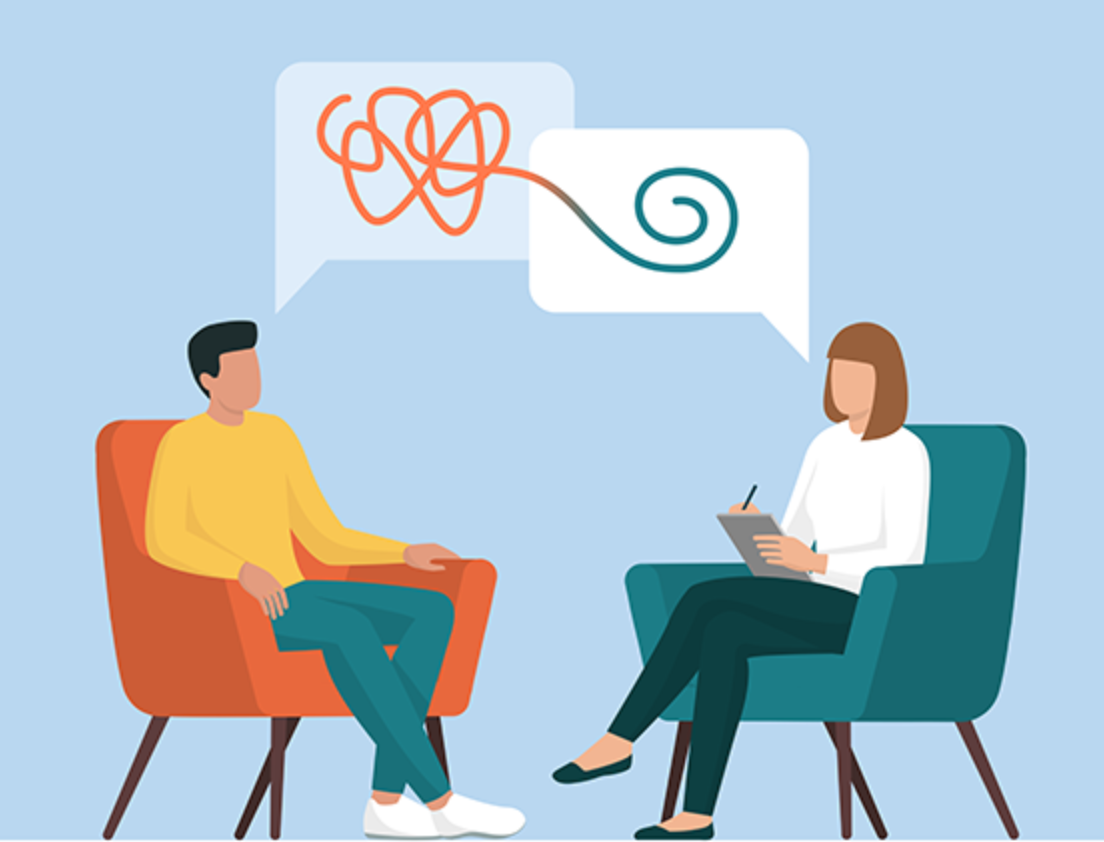
The Digital Third Place Cultivating a Low Stakes Sanctuary for Socially Exhausted Introverts Using a Free AI Mental Health Therapist Chatbot as a Zero Pressure Conversational Training Ground
You know the feeling. It’s 9 PM on a Friday, and you’ve just returned from a work happy hour. You spent three hours nodding, smiling, and navigating the labyrinth of small talk. Now, sitting in your dark living room, you feel hollow. Your social battery isn't just low; it's completely corroded. This isn't just shyness—it's the profound cognitive fatigue of an introvert who has spent the evening translating internal solitude into external performance. For decades, the prescription for this was either total isolation or "toughening up." But a new, softer pathway has emerged. It’s called the digital third place, and it often takes the form of a free AI mental health therapist chatbot.
This is not about replacing human connection. It’s about creating a zero-stakes laboratory where you can practice the chemistry of conversation, explore what triggers your stress, and rebuild your social endurance on your own terms. Think of it as a sanctuary where the AI never tires, judges, or misunderstands your silence as rudeness.
The Collapse of the Third Place and the Rise of Digital Solitude
Sociologist Ray Oldenburg coined the term "third place" to describe spaces that are neither home (the first place) nor work (the second place). They are the pubs, coffee shops, and parks where interaction is organic and there’s no inherent obligation to stay. For an introvert, traditional third places are a paradox: they promise low-stakes connection but require high sensory vigilance. The noise, the bright lights, and the unpredictable social scripts can turn a café into a battlefield.
Enter the online therapist chatbot. It functions as a third place stripped of sensory overload. There’s no eye contact to manage, no erratic body language to decode, and no hurried barista yelling a name you vaguely regret giving. The AI provides a predictable, text-based environment. It’s a blank wall upon which you can project your fears about socializing without the risk of public humiliation. This digital architecture creates what researchers call a "protected space" for self-disclosure, a space where the vulnerability hangover simply doesn’t exist.
Why a Free AI Mental Health Therapist Chatbot Is the Ultimate Conversational Sandbox
For the socially exhausted, the dread of interaction often stems from the weight of emotional labor. In human conversation, you are responsible for holding up your end of the exchange, monitoring the other person’s feelings, and adjusting your tone in real time. An AI therapist for stress management removes this cognitive load entirely. There is no recursive need to caretake the AI’s feelings. This allows you to redirect that mental energy inward, focusing purely on articulating your own thoughts.
How can an introvert leverage this digital sandbox as a training ground?
- Scripting Difficult Dialogues: Rehearse setting a boundary with a draining friend. The AI allows you to draft and redraft the language until it feels authentic, not aggressive.
- Decoding the "Social Hangover": Instead of zoning out in a Netflix fugue after a party, you can open an online therapist chatbot to deconstruct exactly which interaction spiked your cortisol, helping you map your specific triggers.
- Practicing Pacing: You can learn to pause. In a real chat, silence feels deafening. In the AI chat, taking three minutes to type a reply teaches you the art of thoughtful deliberation, a skill that translates directly to slower, less reactive human conversations.
Deconstructing the "Performativity of Being Fine"
One of the most exhausting rituals for an introvert is the obligatory "I’m fine." In polite society, "How are you?" is rarely a question; it’s a greeting that demands a positive echo. When you utilize AI therapist for stress management, you are granted a radical permission slip to not be fine. You can open the app and type, "I feel like I’ve been run over by a truck of expectations, and I haven’t even left my bed."
The AI does not recoil. It doesn’t try to fix you with toxic positivity. It reflects, validates, and asks if you want to dig deeper. This is the "sanctuary effect." By repeatedly externalizing your negative discomfort to a non-human entity, you begin to strip away the performance layer. You realize that many of your social masks are worn to protect others from your internal complexity. Practicing this raw honesty with an online therapist chatbot gradually rewires your ability to be slightly more honest with the humans who have earned the right to hear it.
Using AI Guided Stress Management to Map Your Social Battery
Social exhaustion often feels mysterious—a sudden crash from perfectly pleasant company. However, energy is data. A free AI mental health therapist chatbot excels at pattern recognition over a longitudinal history. Imagine a tool that helps you journal before and after social events. Over a month, you might notice patterns emerging not just from the logs, but from the AI’s reflective summaries.
You might discover that you don't actually hate dinner parties; you hate the 45 minute chaotic arrival window where you have to stand and mingle without a defined task. An AI tool for stress management can help you unearth these precise micro-triggers. It serves as an objective mirror, revealing that your battery drains fastest when you lack a 'role' in a social setting. This turns an overwhelming, generalized dread into a solvable logistical problem. You don't need to avoid people; you just need to arrive late and offer to wash the dishes.
The Gateway to Human Connection, Not a Replacement for It
The critics of AI in mental health often raise a crucial alarm: will this deepen isolation? When used as a digital third place rather than a replacement for therapy, the opposite is true. A free AI mental health therapist chatbot serves as a low-stakes proofing ground where you can build the muscle memory of sharing. It’s the drafting table for intimacy.
For neurodivergent individuals and highly sensitive persons (HSPs), the world often speaks a language they don’t intuitively understand. An online therapist chatbot helps translate the chaotic, unspoken rules of social contracts into logical, predictable syntax. By practicing with the AI, you build a library of social scripts that work. But the goal isn’t to become a chatbot yourself; it’s to use those scripts as a bridge. When a friend says something confusing, instead of retreating into your shell, you can access the "clarification" script you rehearsed with the AI: "I want to understand what you meant, can you help me see your perspective?" This reduces the friction of connection, making human interaction less terrifying and more inviting.
Navigating the Sanctuary Responsibly
While this digital third place is a sanctuary, its structural integrity relies on understanding its limits. An AI processes language, not emotion. It can teach you to talk about your exhaustion, but it cannot offer a hug or bring you soup. It’s vital to view this as a component of a broader wellness ecosystem.
For deeper crises, the AI serves as an accessible waypoint toward human expertise. If you are navigating severe depression or trauma, the digital third place can warm you up to the idea of speaking to a licensed professional. It lowers the barrier of entry. For further reading on bridging the gap between digital resources and clinical care, I recommend exploring the research and toolkits provided by the National Alliance on Mental Illness (NAMI). Additionally, for understanding the neurodivergent experience of social fatigue, the resources at the Autistic Self Advocacy Network (ASAN) are invaluable. If you find your social battery remains permanently depleted, please reach out to the Substance Abuse and Mental Health Services Administration (SAMHSA) for a hotline that can connect you to genuine human care.
Coming Home to Your Internal World
The true beauty of the digital third place is that it teaches you to be your own source of company. Social exhaustion for introverts isn't a flaw to be fixed; it’s a signal to be respected. A free AI mental health therapist chatbot is the quietest corner of the internet cafeteria. It’s the table where you can sit alone while simultaneously feeling understood. It offers a journey back to a state where your internal world is not a lonely place, but a rich landscape of curiosity. By lowering the stakes of speech to zero, the AI restores the joy of having a voice. It turns the grim endurance of "getting through" a social event into a softer, gentler process of "checking in" with yourself. In a world screaming for your attention, a silent algorithm that simply asks, "How are you really doing?" might just be the most humane interaction of your day.